Regained Light and Clearance
Lower canopy heights and pull back branches from roofs, outdoor living areas, and solar panel arrays.
Safe canopy reduction and expert tree management to control overgrown trees on Trinity Beach properties.
Delivering height and canopy management across Trinity Beach and surrounding coastal suburbs.
When property owners look for tree lopping Trinity Beach services, they typically have trees that have grown too tall, are blocking light, or are crowding powerlines and rooflines. In the humid tropical climate of Trinity Beach, fast-growing trees can quickly overwhelm residential blocks. We deliver strategic canopy reduction that achieves the space and clearance you need while avoiding destructive topping cuts that lead to rapid rot.
In Trinity Beach, traditional lopping (topping) of trees like mangoes, poincianas, or raintrees leads to rapid fungal infection in open cut stubs during the wet season. Our selective reduction methods protect the tree trunk while reducing overall height.
Lower canopy heights and pull back branches from roofs, outdoor living areas, and solar panel arrays.
Avoid creating weak, weakly attached shoots that snap off easily in coastal thunderstorm winds.
Establish clean clearances along fence lines and driveways without triggering dangerous tree decline.
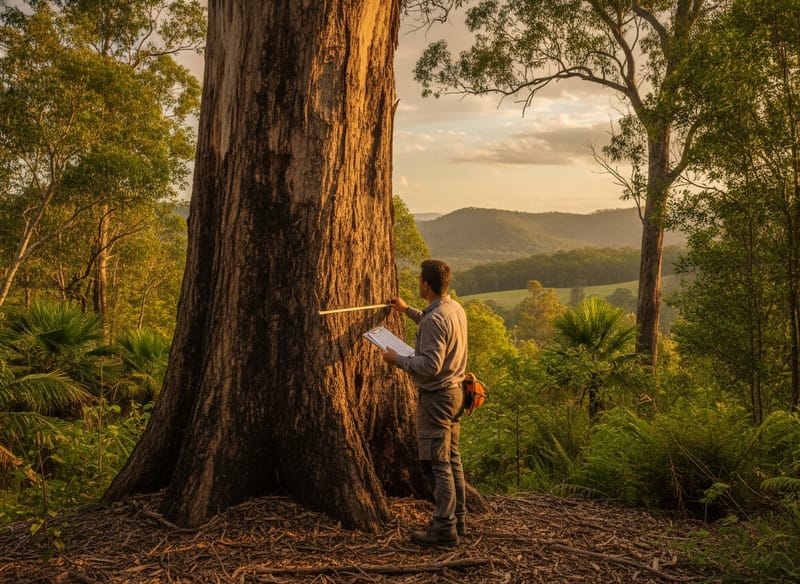
We inspect the tree's height, structure, species traits, and the client's space requirements.
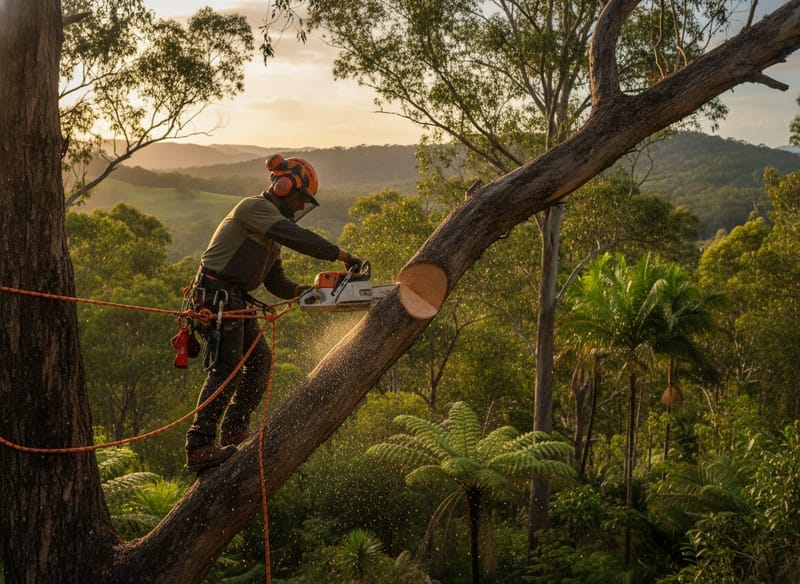
We identify natural reduction points (lateral branch collars) to drop height without damaging tree vitality.
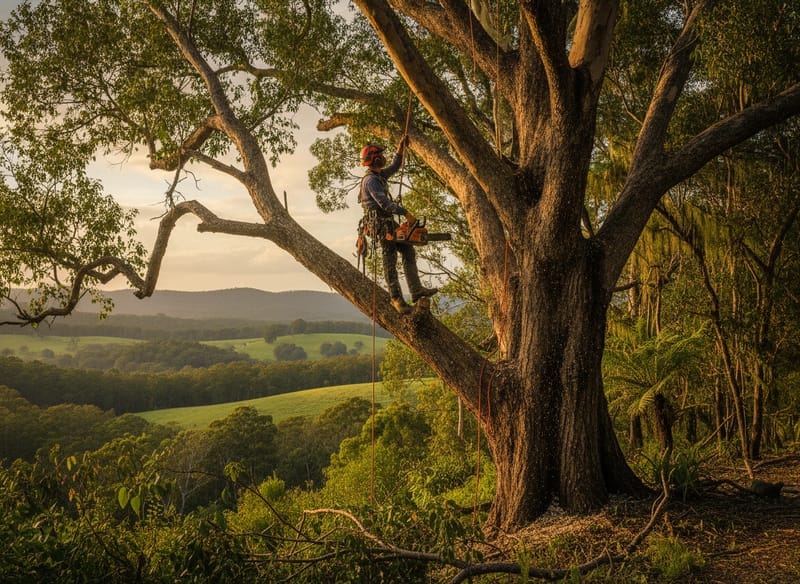
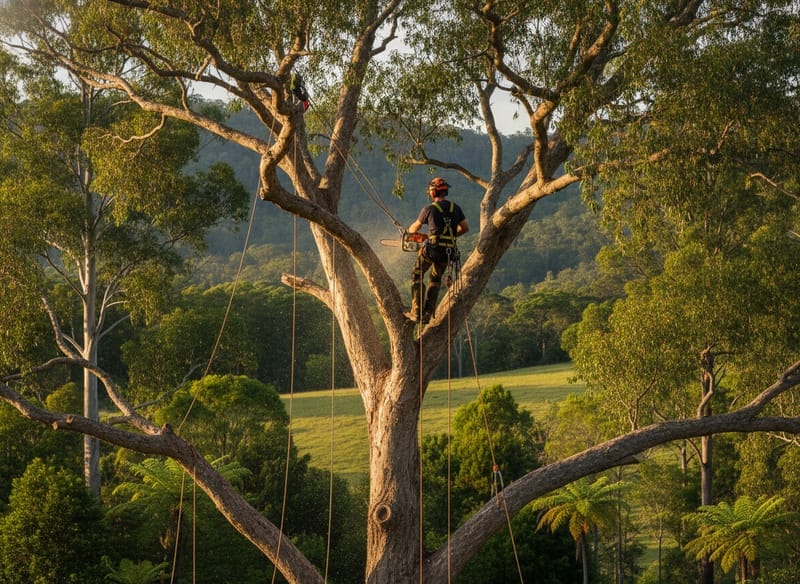
Our climbers work through the crown, lowering branch sections systematically using safety rigging.
We feed all cut timber and foliage through our chipper and rake the site clean.
Living in the wet tropics means dealing with explosive canopy growth. Whether you are managing an acreage block, a beachfront property, building a new development, or maintaining a suburban home, finding reliable Tree Lopping Trinity Beach is critical before the heavy wet season sets in. Our team understands that when local property managers and homeowners ask for tree lopping, they want an overgrown tree made smaller, safer, and more manageable without compromising the property's aesthetics or leaving a trail of destruction. Trinity Beach combines sandy, salt-exposed coastal conditions with steep hillsides rising toward Smithfield. In this unique environment, heavy canopies on species like Weeping Figs, Mangoes, and fast-growing African Tulips become serious hazards during cyclonic winds. Saturated soils and tropical monsoon storms mean top-heavy trees are highly prone to full root-plate failure. We provide professional, arborist-guided canopy reductions, precise pruning, and safe branch removals to protect your home, keep your trees structurally sound, and ensure full compliance with local council regulations.
The term "lopping" usually brings to mind indiscriminate, flat cuts that hack a tree down to size. While many homeowners ask us for tree lopping when they simply want to fix an overgrown canopy, old-school heading cuts are highly destructive. Slashing branches without regard for the branch collar leaves large stubs that struggle to heal, opening the tree up to fungal decay and tropical pests which thrive in the Cairns climate. Worse, topping a tree triggers a massive stress response. The tree rapidly pushes out weak, epicormic regrowth to compensate for the lost foliage. In a severe tropical cyclone like Jasper or Narelle, these weakly attached branches are the first to snap, creating dangerous flying debris that threatens roofs, powerlines, and windows. When you hire our team, we deliver the results you want from tree lopping—a smaller, safer, more manageable tree—but we do it using AS4373-compliant pruning techniques. We target specific branches, selectively thin the canopy to let wind flow through, and reduce the height correctly. This arborist-approved approach protects your structural root zones, keeps the tree healthy, and drastically reduces the need for constant, expensive repeat maintenance.
When our clients request Tree Lopping Trinity Beach, we evaluate the site and apply targeted, Australian Standard techniques to achieve the safest reduction without ruining the tree.
We carefully reduce the overall height and spread of the tree by cutting back to appropriate lateral branches. This maintains the tree's natural shape while significantly reducing wind load, replacing the need for damaging topping cuts.
Removing lower branches to provide clearance for driveways, pedestrian paths, and outbuildings. This is a crucial technique for managing tight side access and maintaining sightlines in dense coastal suburbs.
Selectively removing secondary branches throughout the canopy. This allows intense cyclonic winds to pass safely through the tree rather than catching it like a sail, severely reducing the risk of uprooting in saturated soils.
Safe, rapid canopy reduction for trees heavily damaged by monsoon rains or cyclonic winds. We remove fractured limbs and stabilise the remaining structure to prevent further collapse and property damage.
Routine removal of heavy coconuts, seed pods, and dead fronds from Coconut and Alexandra Palms along the beachfront to prevent property damage and pedestrian hazards before the wet season.
We handle every job with absolute precision, ensuring your property is protected from the first cut to the final cleanup.
First, we conduct a comprehensive on-site assessment. We evaluate the tree's health, its location relative to your home or powerlines, and whether the proposed work triggers any Cairns Regional Council vegetation mapping overlays. We then provide a clear, upfront quote outlining the exact pruning methods required to achieve your goals without resorting to illegal or harmful topping practices.
On the day of the job, our climbers and ground crew arrive fully equipped. Depending on the terrain—whether it is a flat block near the beach with tight side access or a steep hillside property backing onto the rainforest—we deploy single-rope access techniques, tracked spider lifts, or EWPs. We execute targeted collar cuts to reduce the canopy safely, carefully rigging heavy limbs down to avoid damaging understory plants, fences, or paving. If roadside work is required, we manage all necessary traffic control.
Finally, we process all green waste through our high-capacity wood chippers. We can leave the premium mulch on-site for your garden beds or haul the debris away in our tipper trucks, leaving your property immaculate and ready for storm season.
Canopy work in the wet tropics carries significant risk, which is why our team operates to the highest safety and compliance standards. All our active climbers hold AQF Level 3 in Arboriculture and specific high-risk tickets, including elevated work platform (EWP), Working at Heights, and rope access certifications.
We strictly adhere to AS4373 Pruning of amenity trees, ensuring every cut promotes tree health rather than decay. For sites requiring formal council documentation under AS4970, our AQF Level 5 consulting arborists can provide detailed retention and risk assessment reports. Our business is fully insured with comprehensive public liability and WorkCover, giving property owners complete peace of mind when our trucks roll onto the site.
Managing trees in this region requires deep local knowledge. Trinity Beach features a unique mix of salt-tolerant beachfront palms and dense native rainforest species, like Blue Quandong and Raintrees, pushing down from the steep Smithfield hills.
Cairns Regional Council strictly regulates tree works to protect the city's 79 percent urban canopy cover. Under the CairnsPlan 2016, any tree over 7.5 metres tall is classed as a Significant Tree. Assessable vegetation damage on private land usually requires a Development Permit for Operational Works. Fortunately, clear exemptions exist for deadwood removal, hazardous limb reduction, and AS4373-compliant formative pruning.
During state-declared disaster periods, such as the clearing exemption following Severe Tropical Cyclone Narelle, rules around hazard clearing are temporarily relaxed to protect life and property. However, professional assessment remains vital. Our team knows exactly how to navigate these local overlays, ensuring your canopy reductions are fully compliant with both council and state laws.
After a significant canopy reduction, your trees will need a little time to recover and adjust. We highly recommend applying the fresh mulch we leave behind over the structural root zone. This helps retain vital moisture and regulates soil temperature during the intensely hot and humid summer months. Keep up regular watering if the weather is unusually dry, but avoid heavily fertilising after major pruning, as this can encourage the weak epicormic growth we work hard to prevent. For fast-growing tropical species like Poinciana or African Tulip, biennial inspections are recommended. Reach out to our team ahead of the cyclone season every year so we can assess your larger trees and clear hazardous palm nuts before the monsoon hits.
Canopy reduction and lopping-alternative services are priced based on tree size and physical access.
We provide honest, upfront quotes with competitive pricing and clear explanations of the work.
Managing overgrown canopies across Trinity Beach and neighbouring coastal suburbs.
Contact us today for professional canopy reduction and tree management.
Get a Free Quote